HVAC Installations
HVAC Installations in Lubbock for homes and businesses replacing aging equipment or upgrading cooling capacity
An undersized air conditioner runs constantly during July and August without ever reaching the thermostat setting, while an oversized unit cycles on and off too frequently and fails to control humidity. vonBerg Plumbing Heating and AC installs heating and cooling systems for residential and commercial properties across Lubbock, Levelland, and West Texas, matching equipment capacity to actual load requirements rather than simply replacing what was there before. The installation process includes evaluating the building's thermal envelope, existing ductwork condition, and airflow patterns to determine what size system will maintain comfort without wasting energy.
Professional HVAC installation addresses the entire system, not just the outdoor condenser unit. The process considers ductwork sealing, refrigerant line sizing, thermostat placement, airflow balancing, and whether the existing infrastructure can support the new equipment efficiently. For properties with inconsistent room temperatures or rooms that never cool properly, installation often reveals duct leaks, undersized return air pathways, or improper register placement that need correction alongside the new equipment.
Schedule a property assessment to review your current system performance and cooling requirements.
Systems Sized Correctly for West Texas Heat
What Proper Installation Requires
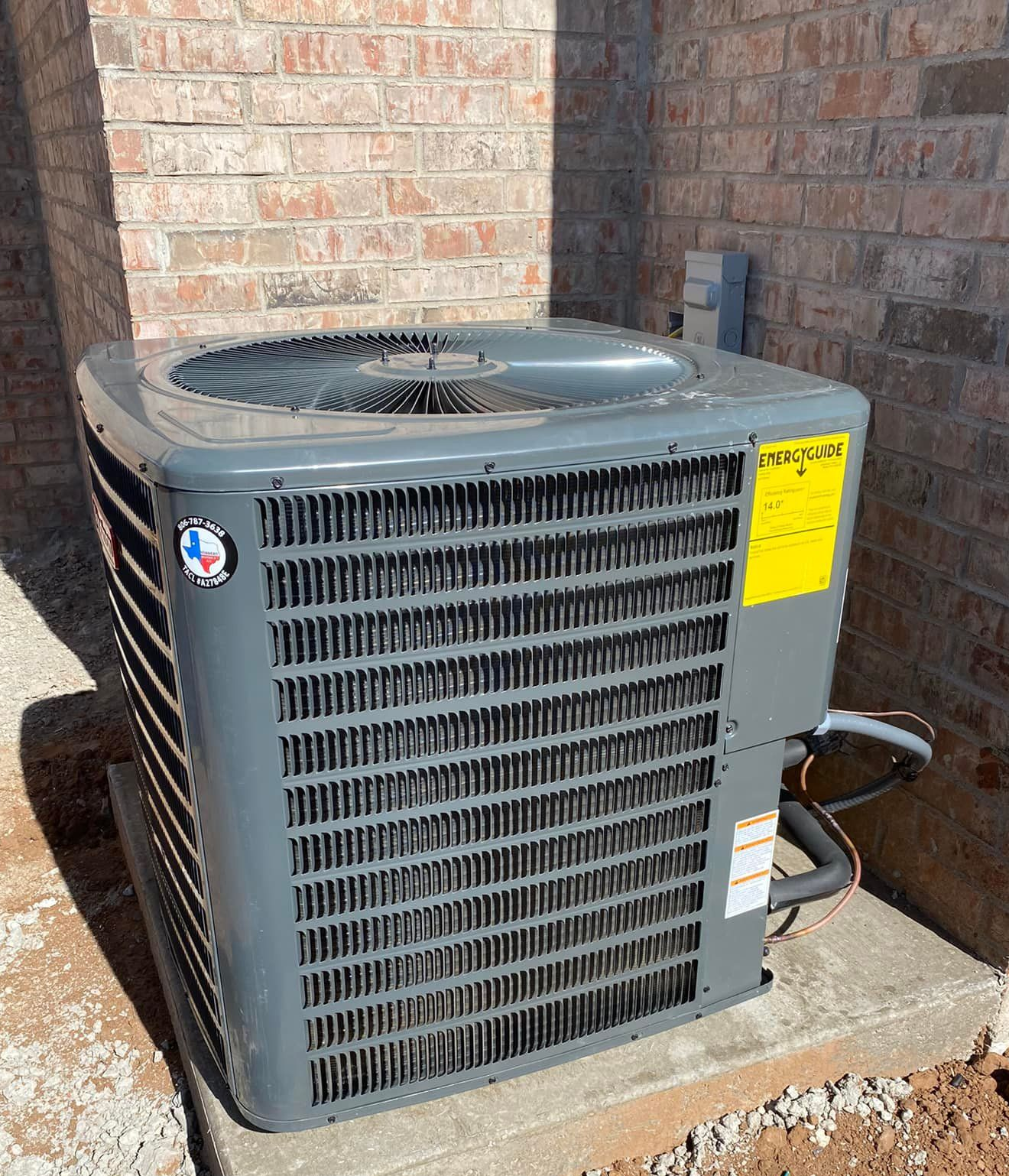
Installing a new air conditioning system, heat pump, or furnace begins with load calculation to determine the correct equipment size for the building. Technicians measure square footage, insulation levels, window area, ceiling height, and occupancy patterns to calculate heating and cooling needs, then select equipment that matches those requirements without significant over-capacity or under-capacity. The installation includes setting the outdoor unit on a level pad, running correctly sized refrigerant lines, connecting to existing or new ductwork, installing or upgrading the thermostat, and pressure-testing the refrigerant system before startup.
After the physical installation is complete, airflow is measured at each register to confirm balanced distribution throughout the building. Refrigerant charge is verified using subcooling or superheat measurements to match manufacturer specifications, which directly affects cooling efficiency and compressor lifespan. Thermostat programming is configured for the specific equipment type, whether it's a single-stage air conditioner, two-stage heat pump, or variable-speed system, so the controls operate the equipment as designed.
vonBerg currently installs systems from Carrier, Goodman, and Daikin, and the choice often depends on whether the priority is warranty coverage, upfront cost, or specific features like variable-speed operation or smart thermostat compatibility. Installation for new construction follows a different timeline than replacement work, since ductwork is installed during framing and the equipment is set after the building is enclosed and insulation is complete.
Questions Before Starting Your Project
Homeowners and business owners throughout West Texas typically ask about system sizing, equipment options, and what the installation process involves before committing to a new HVAC system.
How do you determine the correct system size for my building?
Load calculation accounts for insulation, window area, ceiling height, and occupancy to match equipment capacity to actual heating and cooling demand, preventing the inefficiency and comfort problems that result from oversized or undersized systems.
What is included in a complete HVAC installation?
The process includes setting the outdoor unit, running refrigerant lines, connecting ductwork, installing the indoor air handler or furnace, mounting the thermostat, pressure-testing refrigerant circuits, verifying airflow at registers, and programming controls for the specific equipment installed.
When should I replace my air conditioner instead of repairing it?
Systems older than twelve to fifteen years, especially those requiring refrigerant recharge or compressor work, often cost more to repair and operate than replacing with a higher-efficiency model that reduces monthly cooling costs.
Can you install a heat pump or mini-split system instead of a traditional split system?
Heat pumps provide both heating and cooling using a single system, which works well in Lubbock's climate where winter heating loads are moderate, while mini-splits allow zone control for buildings where running ductwork is impractical or cost-prohibitive.
How long does a typical residential installation take?
Most single-family home installations are completed in one day once the equipment arrives, though properties requiring ductwork modification, electrical upgrades, or structural changes to accommodate the new equipment may extend the timeline to two days.
vonBerg Plumbing Heating and AC brings more than fifty years of combined technician experience to every installation project across Lubbock and Levelland. Request a detailed estimate that includes load calculation results and equipment options suited to your property's cooling needs.