Water Heaters
Reliable Hot Water Without Delays or Temperature Swings
Water Heaters in Lubbock for homes with no hot water, leaking tanks, and inconsistent heating
No hot water in the morning, a puddle forming beneath the tank, or water that alternates between scalding and lukewarm during a single shower all indicate your water heater requires professional attention. These problems stem from failed heating elements, sediment accumulation that insulates water from the burner or element, deteriorating tank linings that allow leaks, or thermostat calibration drift that disrupts temperature regulation. vonBerg Plumbing Heating and AC provides water heater repair, replacement, and installation for residential and commercial properties throughout Lubbock, Levelland, and West Texas, addressing the specific failure causing interrupted hot water supply and restoring consistent performance.
Water heater issues develop gradually or appear suddenly depending on the component involved. A heating element that burns out stops producing hot water entirely, while sediment buildup reduces tank capacity over months as mineral deposits from hard water settle at the bottom and occupy space otherwise filled by heated water. Leaks typically originate from corrosion at the tank seam, a failing pressure relief valve, or loose inlet and outlet connections. Diagnosis involves testing electrical components or gas burner operation, inspecting the tank for visible moisture or rust, and evaluating water temperature consistency to determine whether repair or full replacement makes sense given the age and condition of the unit.
Arrange an inspection if your water heater shows signs of failure or underperformance affecting daily hot water availability.
What Water Heater Service Addresses
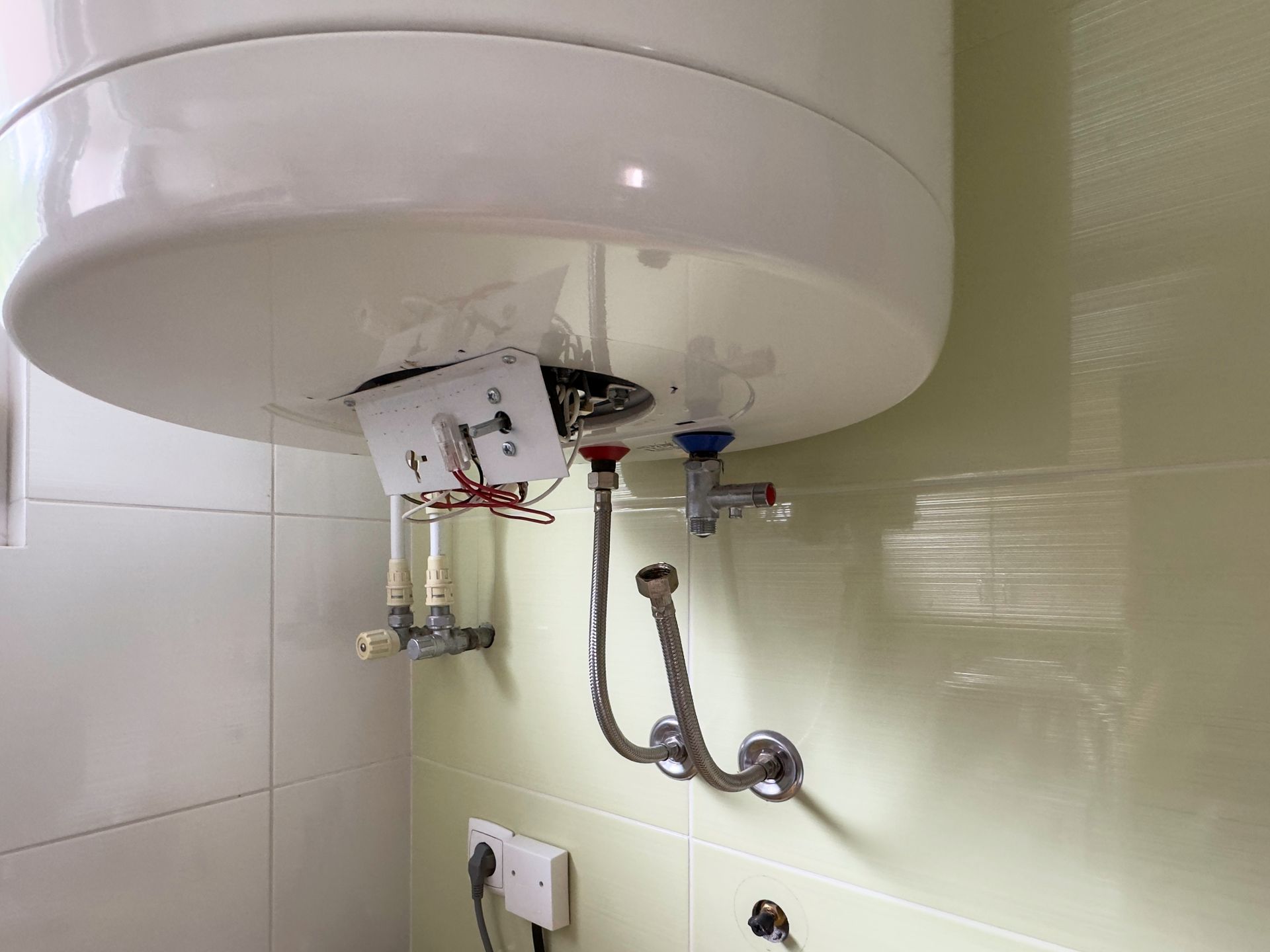
Repairing a water heater involves replacing the specific component that has failed—such as a thermostat, heating element, gas control valve, or pressure relief valve—and testing the system to confirm it heats water to the set temperature and maintains that temperature during use. For tanks showing rust or corrosion, replacement becomes necessary because once the lining deteriorates, leaks will continue or worsen regardless of component repairs. Installation of a new water heater includes removing the old unit, positioning the replacement, connecting supply and discharge lines, configuring gas or electrical connections to code, and verifying proper venting for gas models.
Once service is complete, you'll have hot water restored to normal flow and temperature. Showers no longer turn cold unexpectedly, dishwashers and washing machines receive adequately heated water, and the recovery time between uses returns to the baseline performance expected from a properly functioning heater. If the tank was leaking, the moisture and potential water damage stop as soon as the faulty unit is replaced and connections are sealed.
Service does not include upgrades to larger capacity tanks or efficiency improvements unless those are specifically requested as part of replacement planning. Standard repair or replacement focuses on restoring the hot water supply your household relies on daily, using equipment appropriately sized for your water usage patterns and fuel type availability.
Common Questions About This Service
Property owners in Lubbock and West Texas frequently ask about the causes of water heater failure and when replacement is the better option compared to repair.
Why does my water heater run out of hot water faster than it used to?
Sediment buildup at the bottom of the tank displaces water volume, reducing the amount of heated water available for use. As minerals settle and harden over time, the effective capacity shrinks, causing the heater to run out of hot water sooner even though the tank size hasn't changed.
What causes a water heater to leak?
Leaks typically develop from corrosion within the tank itself, a failing pressure relief valve that drips when it should seal, or loose connections at the cold water inlet or hot water outlet. Once a tank begins leaking from internal corrosion, replacement is necessary because the tank's integrity cannot be restored.
How long does a water heater typically last in West Texas?
Mineral content in local water and frequency of use both affect lifespan, but most residential water heaters operate reliably for eight to twelve years before components degrade or the tank begins showing signs of wear. Regular flushing to remove sediment can extend functional life, but eventual replacement is expected as tanks age.
Can a water heater be repaired if it's making strange noises?
Popping or rumbling sounds usually indicate sediment has accumulated and is heating unevenly, causing steam bubbles to form and collapse. Flushing the tank may reduce noise, but if the buildup is extensive or the heating elements are damaged, replacement of those components or the entire unit may be needed depending on overall condition.
What should I do if my water heater stops working completely?
Check that the circuit breaker hasn't tripped for electric models or that the pilot light is lit for gas models. If power and fuel supply are confirmed and the unit still doesn't heat, a failed thermostat, heating element, or gas control valve is likely, and professional diagnosis will identify which component requires replacement.
vonBerg Plumbing Heating and AC has provided plumbing and HVAC services to families and businesses across Lubbock, Levelland, and West Texas for more than four decades, guided by a commitment to professional work, fair rates, and quality service. Contact vonBerg to evaluate your water heater issue and determine whether repair or replacement will restore reliable hot water to your property.